unity
Building an exclusive women’s health community for people with endometriosis.
To comply with my non-disclosure agreement, I have omitted confidential details and will be using “unity” as the project’s pseudonym.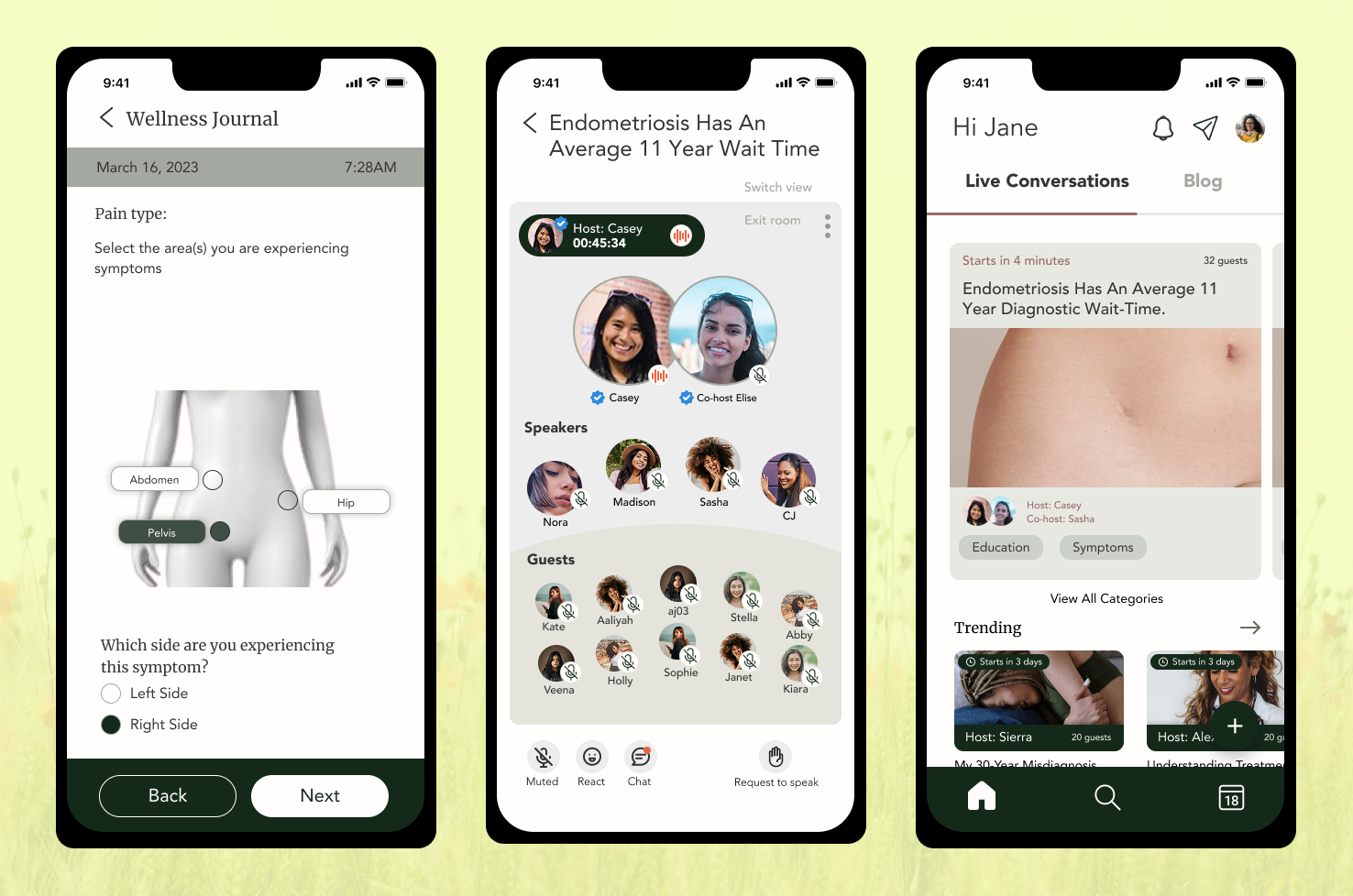
Timeline
February - April 2023 (6 weeks)
Team
Michelle C., Monica C., Janelys G.
Role
I worked as a User Experience Designer along with a team of three other student designers.
My major contributions included
leading the creation of the product’s design system
building out concepts and designs for user flows
creating user stories and features
defining the project’s scope and timeline
Background
On average, it can take up to 7-11 years for a woman or person AFAB to receive an endometriosis diagnosis after the first onset of symptoms.
Finding the right specialist in a timely manner is difficult for individuals with endometriosis symptoms. Even after visiting multiple specialists, they may get misdiagnosed and receive improper treatment. Some of these treatments, such as hysterectomies, are irreversible and may not even work to alleviate symptoms. It is a disease with no definitive cause or cure.
With a delayed diagnosis, these individuals end up experiencing potentially worsened symptoms, increased healthcare costs, and a greatly reduced quality of life.
Endometriosis has a common misconception
This project was deeply personal to our client, so they requested our team to first look at how endometriosis is commonly defined, and asked us to compare it to the research our client provided and how it is defined in studies.
A Google search will tell you that endometriosis is a disease where cells from the uterine lining develop on other organs, and is commonly correlated with menstrual pain. But it’s not nearly as simple as that. Endometriosis is a chronic inflammatory disease with a variety of symptoms that are similar to other chronic diseases’ symptoms, such as irritable bowel syndrome (IBS) or pelvic inflammatory disease (PID).
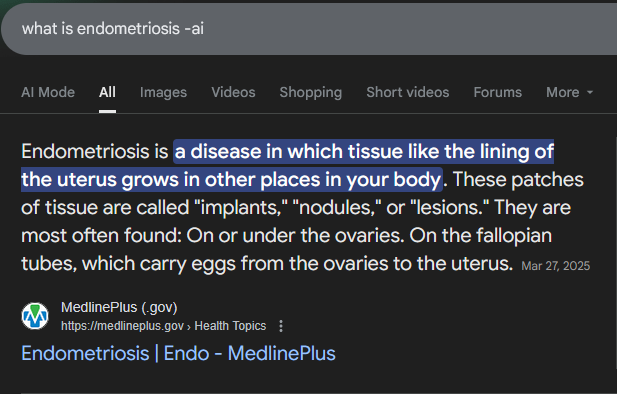
Google search result of “what is endometriosis”
The challenge
Patients suffering from endometriosis symptoms feel unsupported and misunderstood in their health journey.
With a lack of specialists, a long delay between onset of symptoms and diagnosis, high healthcare costs related to the disease, and limited knowledge among practitioners and the general public, it is no surprise that women and people AFAB with endometriosis can feel alone and even ashamed of their struggles. For women of color especially, it can feel more isolating as their symptoms are usually taken less seriously by providers and they are more likely to be dismissed.
Our client approached us with the goal of creating a trusted community portal mobile app for women and people AFAB to share their experiences, educate, and empower others in their endometriosis journey. But with a tight deadline, a broad scope of requested features, and our team initially having a lack of knowledge about the disease and its direct impact on individuals, we needed to quickly get up to speed on the research and narrow down the absolute must-haves for the mobile app.
Solution
While I cannot share the research findings from our client, we were able to gather some key insights from it that led to us developing three key features.
Vetting Process
To create a safe exclusive space, anyone who signs up or is referred to the platform must apply to be a member and be approved by unity’s vetting committee to join.
Once accepted, users will receive a notification via email or SMS depending on the user’s contact preference.
Onboarding
A user can create their profile and choose the topics they’re interested in or comfortable with discussing.
Users can also choose to take a diagnostic questionnaire to get curated care recommendations tailored to the user.
Community Engagement
The heart of unity. Users can host events or listen to discussions through live-streamed audio rooms. They also have the option of engaging in written content like blogs.
Users can also connect with others through the audio room’s live chat feature or through direct message.
Ideation
Given the large scope of this project, our team focused on two main user flows: creating a smooth onboarding experience, and engaging the community through user-created content such as live-streamed audio rooms or written blogs.
I primarily focused on creating the first half of onboarding: the vetting process. This was a major business requirement, and we needed to make sure new users could sign up without complications while creating an exclusive experience for people living with endometriosis.
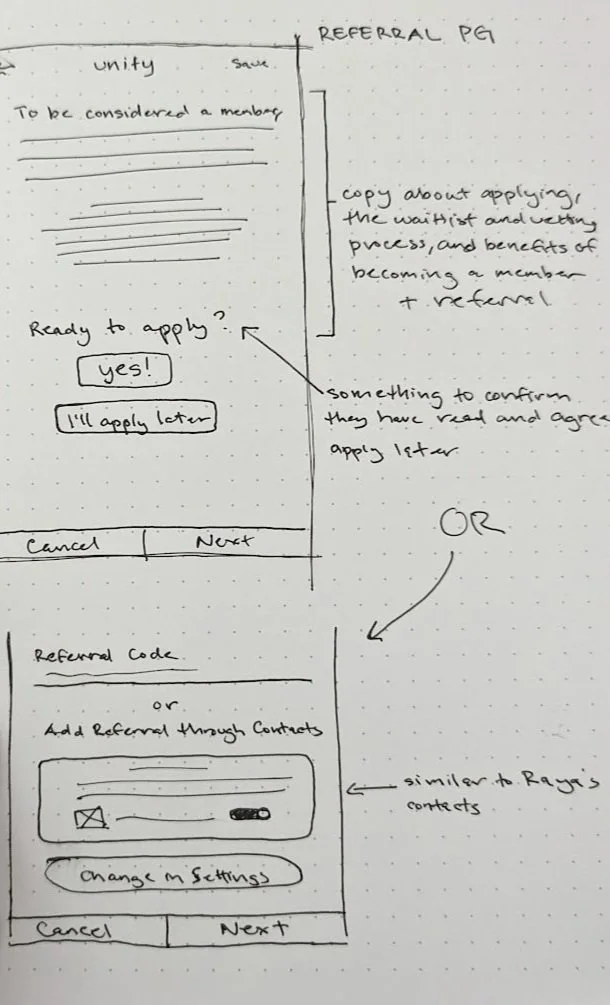
Rough sketch of vetting process introduction
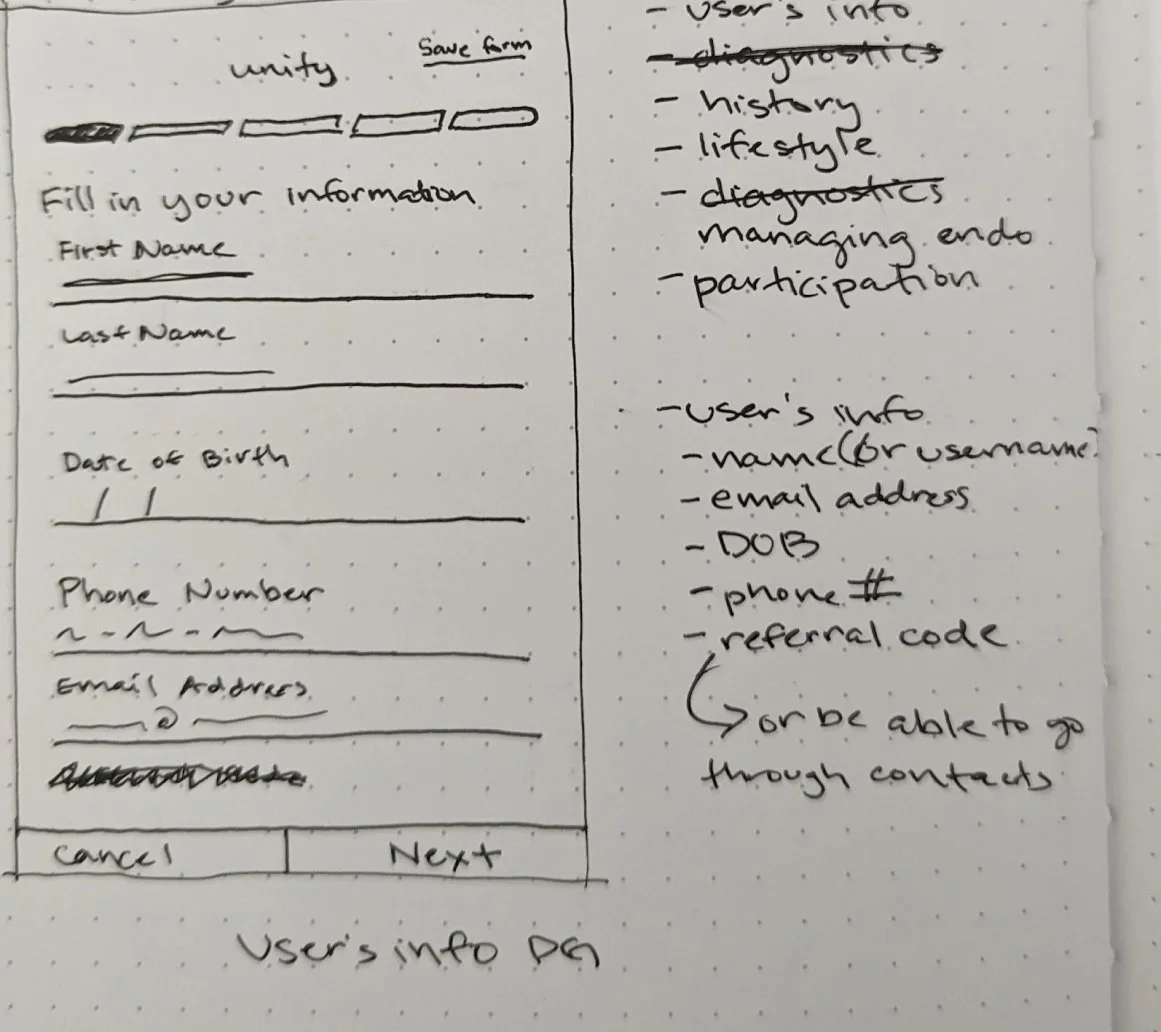
Sketch of form for user information and listing out the questionnaire's flow
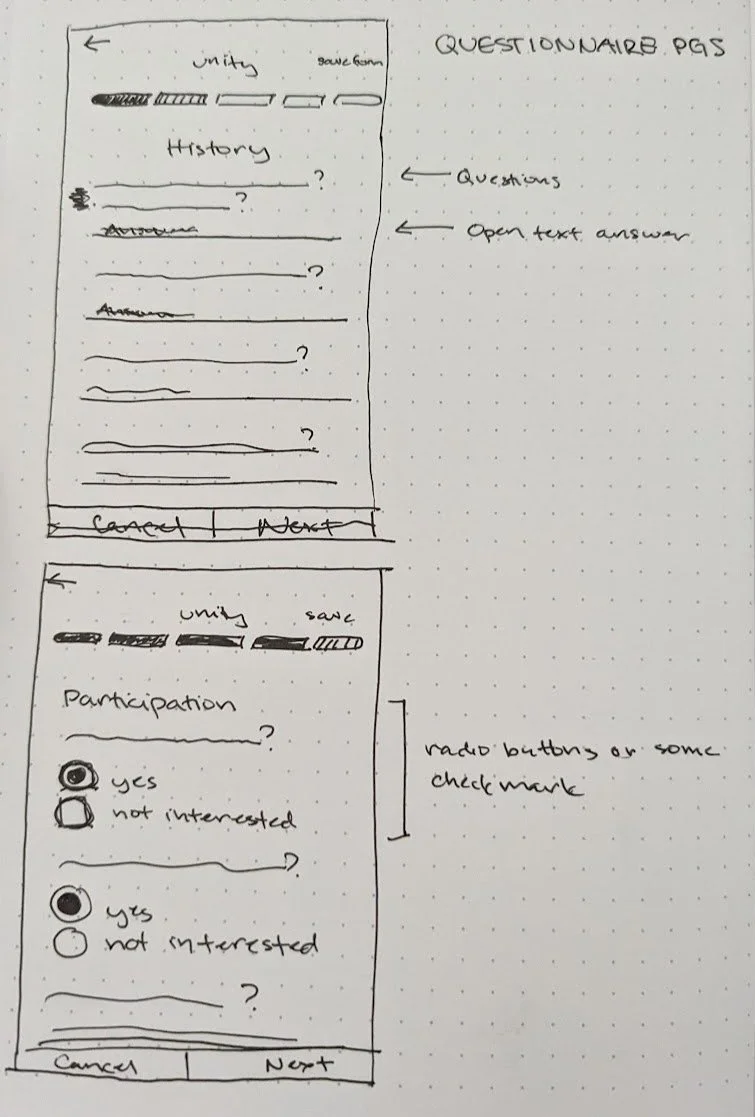
Sketches of pages in the questionnaire
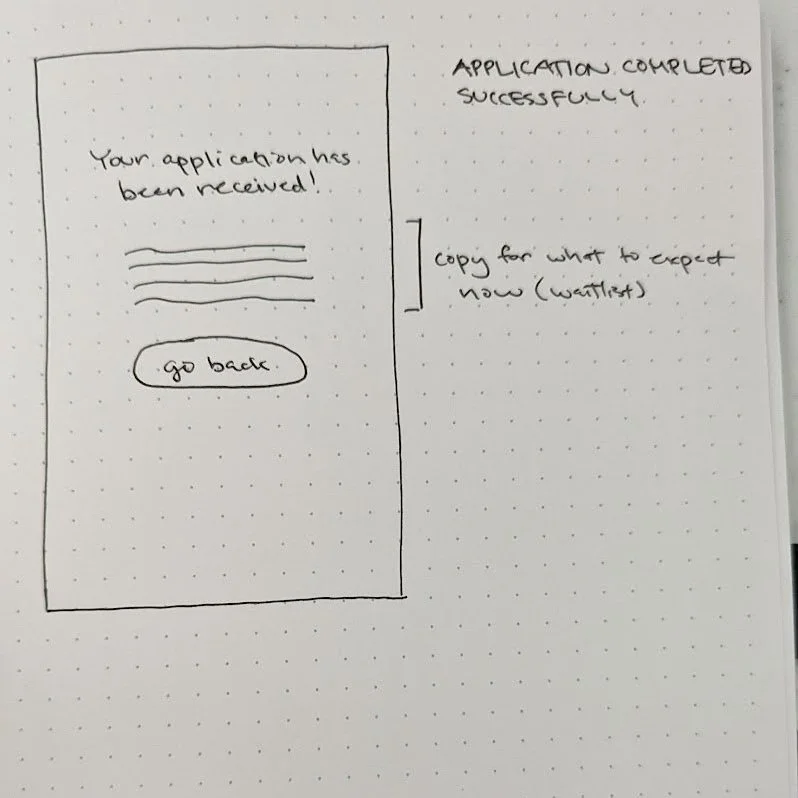
Sketch of user completing the questionnaire
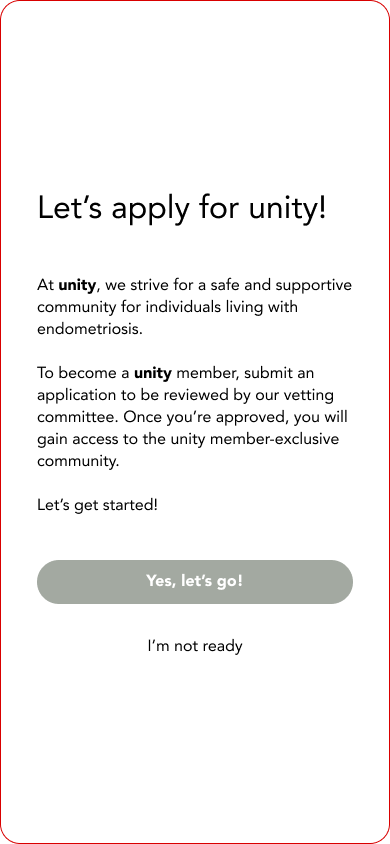
Wireframe of vetting process intro
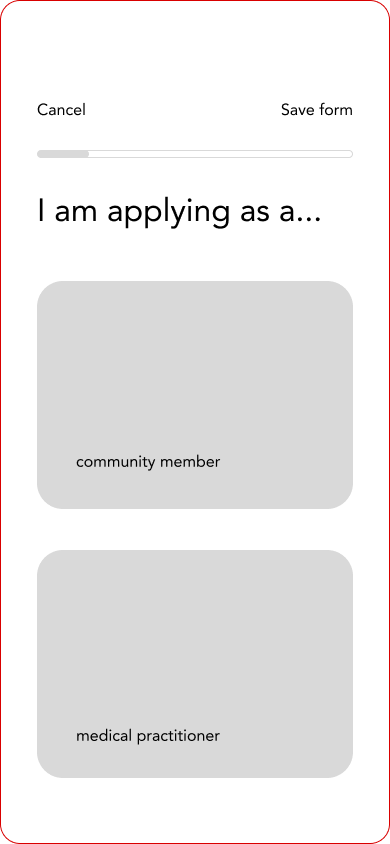
Wireframe of user choosing who they are applying as
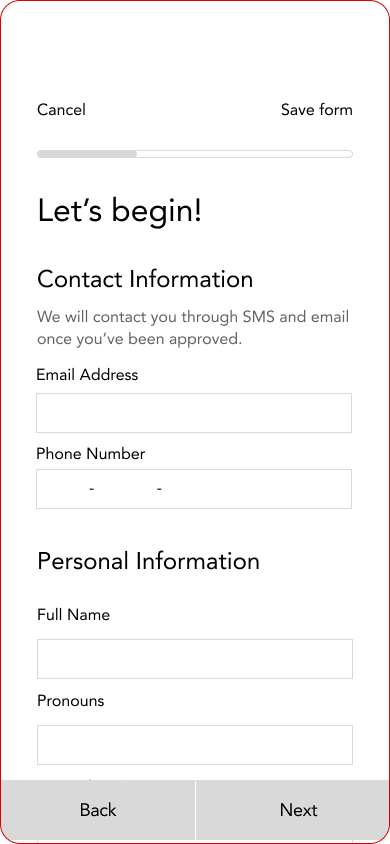
Wireframe of contact information page
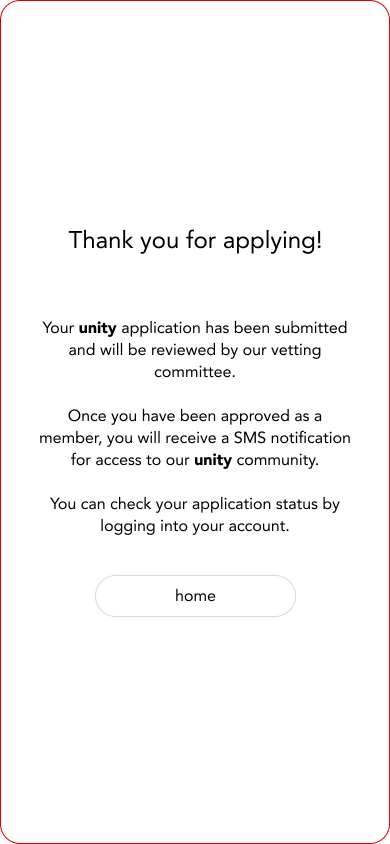
Wireframe of completing the questionnaire
User Testing and Feedback
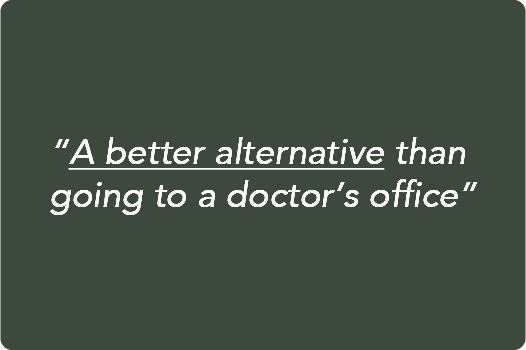
After showing our low-fidelity prototype and testing it with potential users, we were able to get some great feedback from them. For the vetting process overall, users liked how easy the process felt. We were also able to give our users a way to voice out their thoughts and experiences. Our users needed a place to feel comfortable to share their complex stories, and empowered to support others along the same journey.
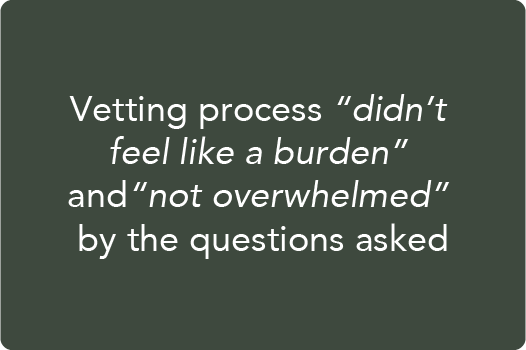
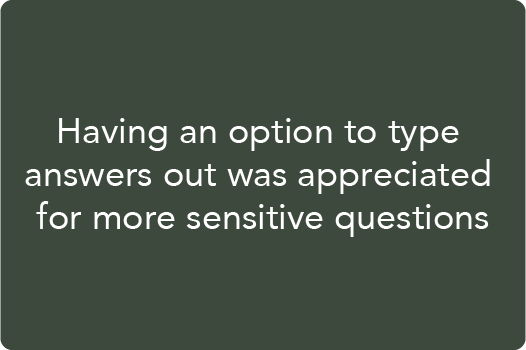
One self-diagnosed user noted how she was hesitant to answer a few questions because she hadn’t received an official diagnosis yet. I quickly realized we would need to word the questions more carefully in the next iteration to include those who were self-diagnosed.
Final Designs
Based on the feedback we got from our user testing, I made a few changes.
Edited verbiage of the questions to be more inclusive of self-diagnosed users
Changed the form’s navigation buttons to adhere to best practices
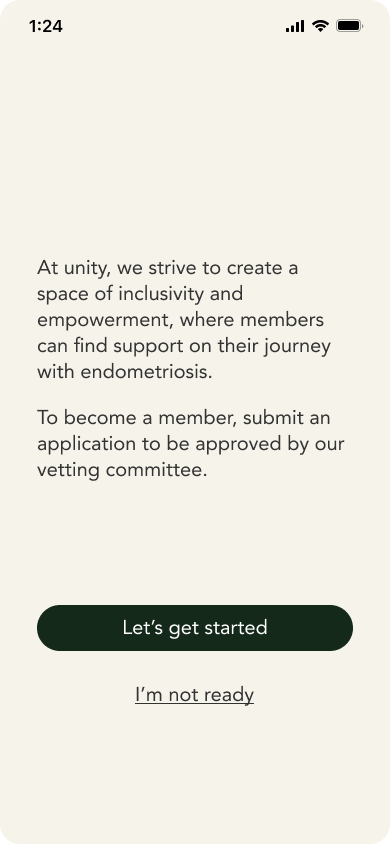
Introducing the vetting process
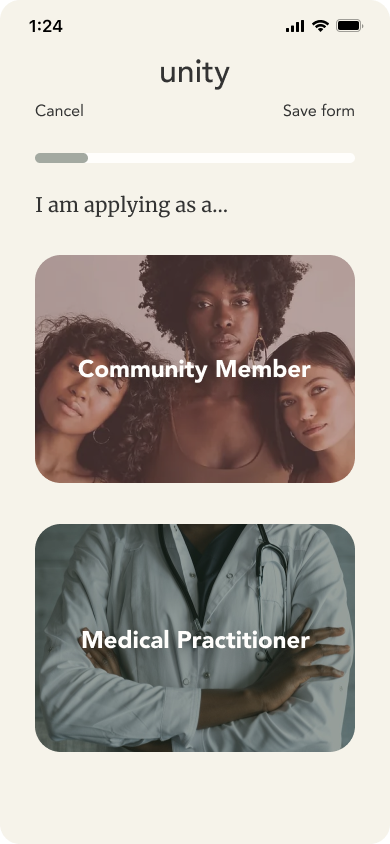
Choose how you're applying as
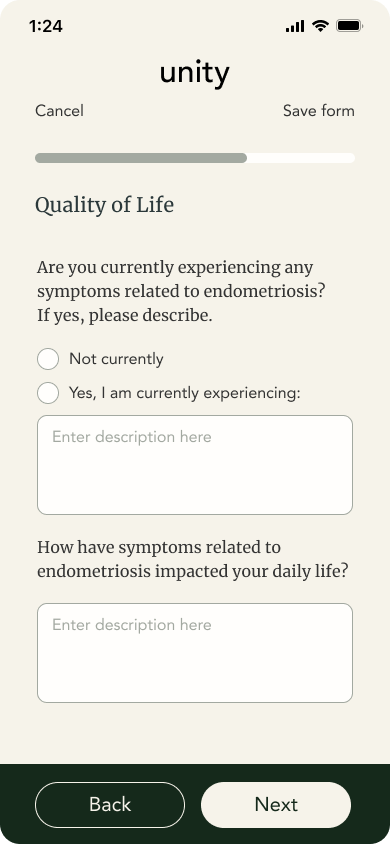
Changed verbiage to be more inclusive of self-diagnosed users
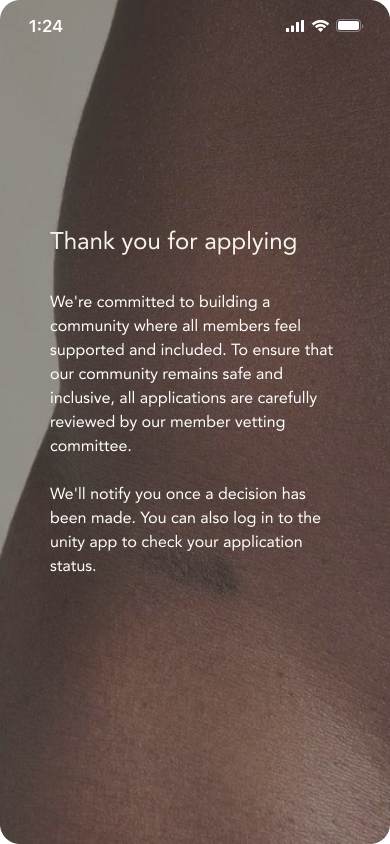
Completed application with an explanation about the reviewing process + what to expect
Design System
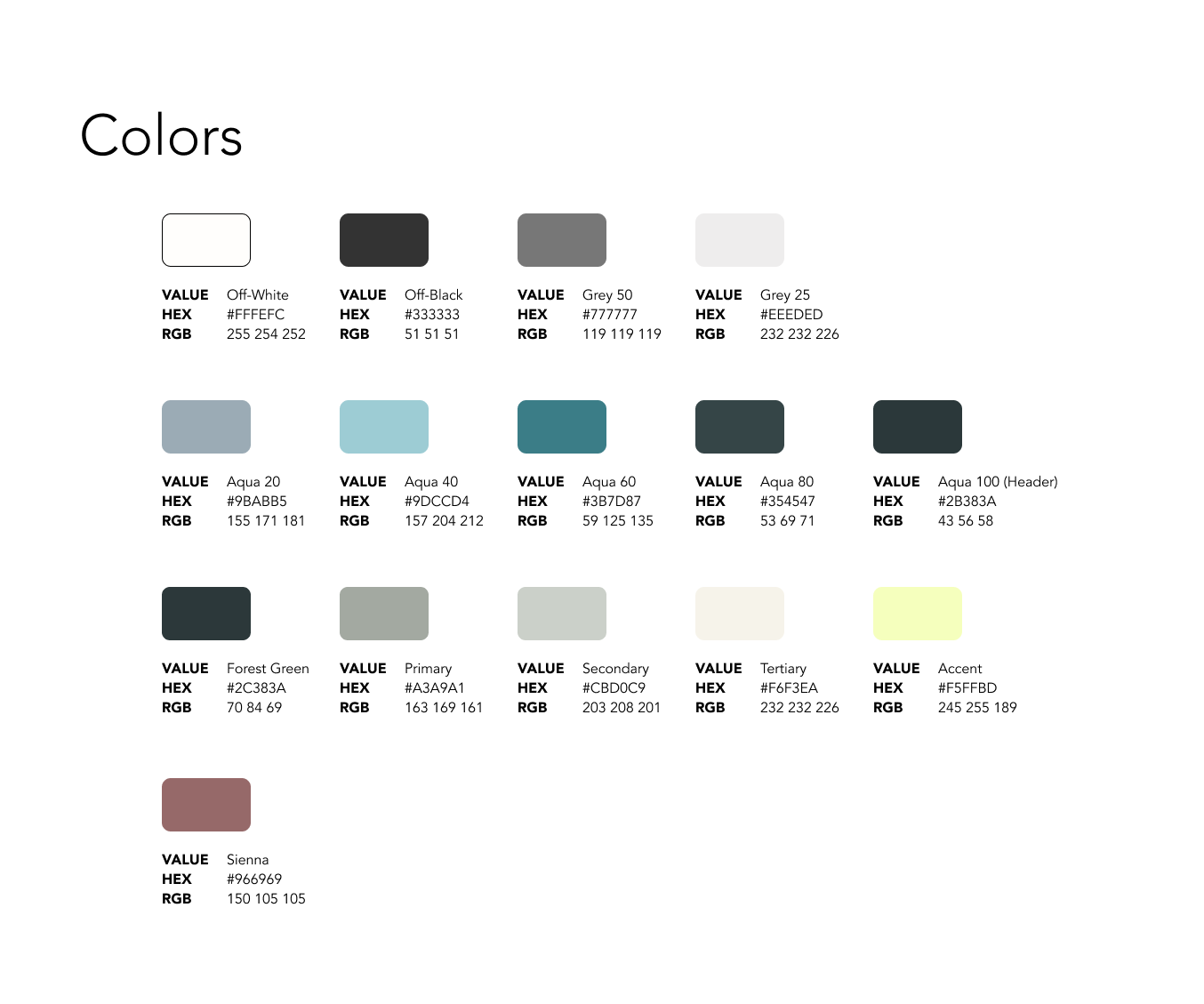
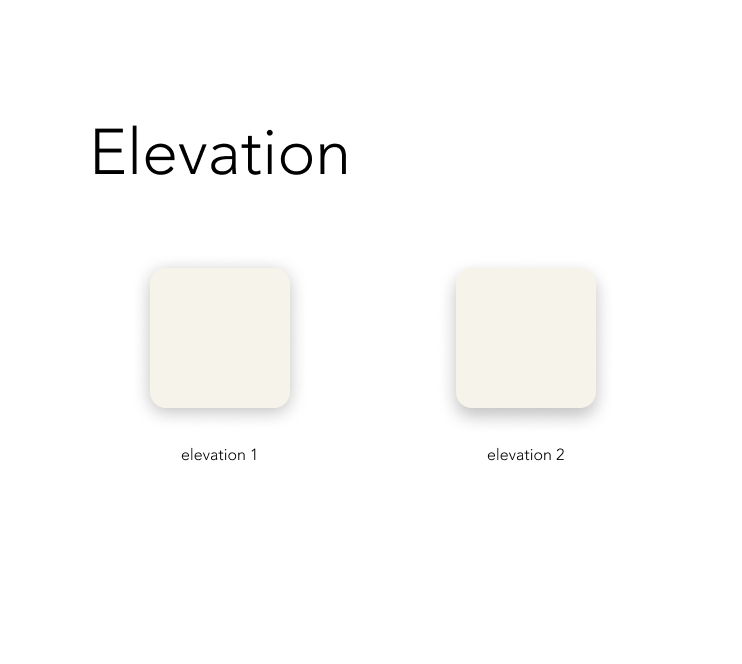
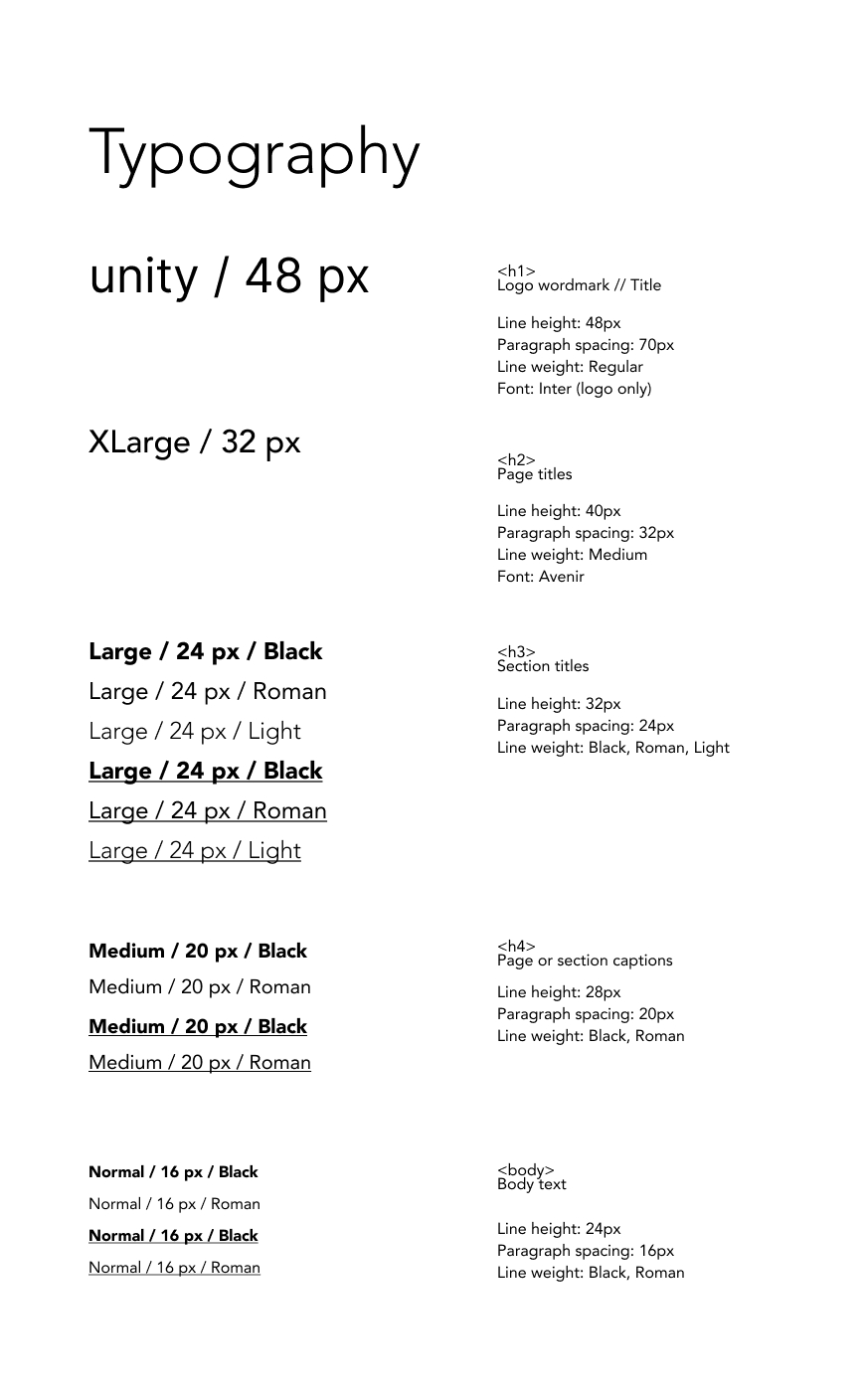
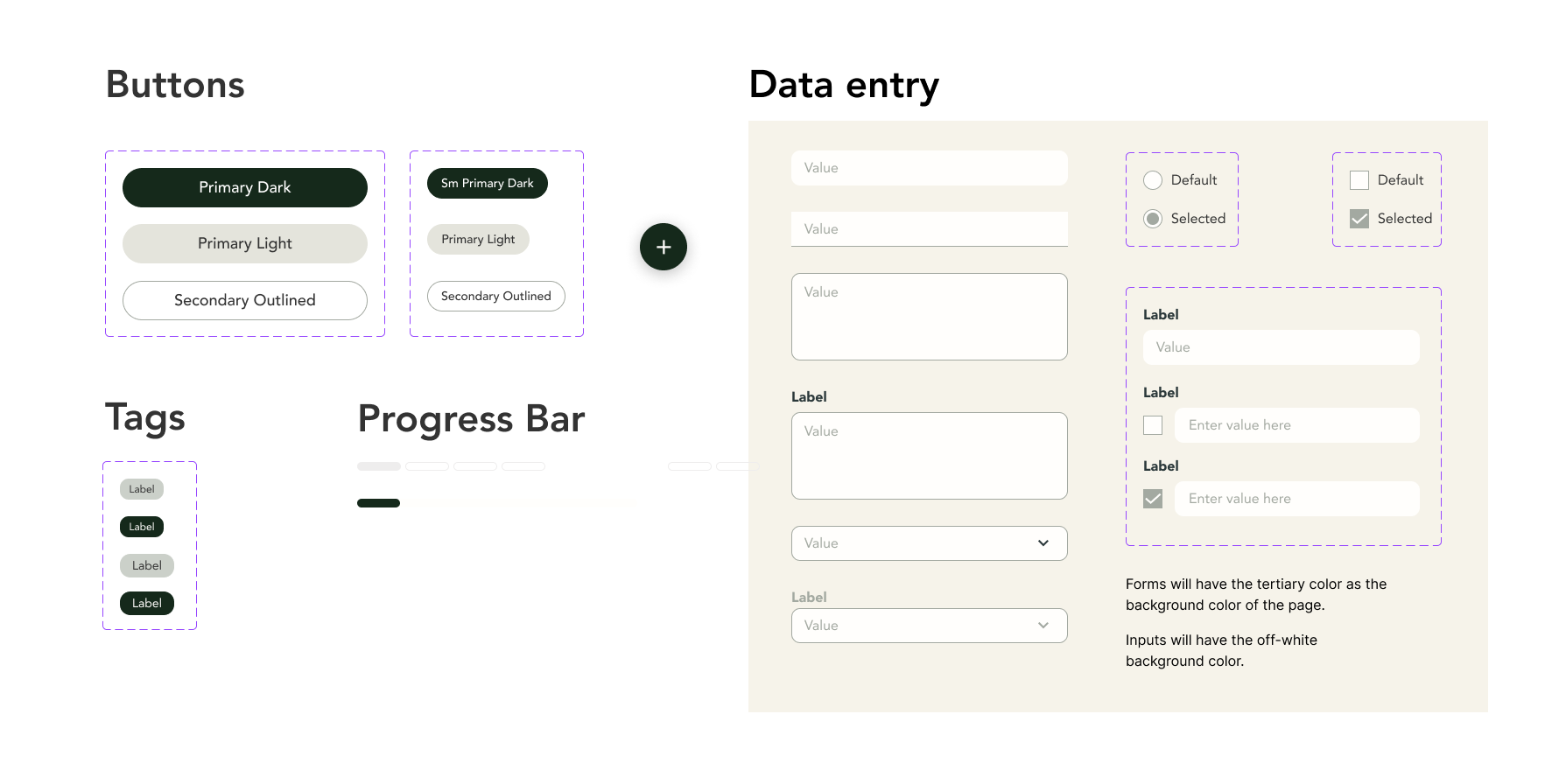
As we were entering the final weeks of this project, I started thinking about how we could make it easier to collaborate on our high-fidelity prototypes. So far, our team had only worked together on the ideation of the features, but worked separately on the features we chose to work on. I decided to lead the creation of our design system so we could make a more cohesive design for our prototypes.
Conclusion
Our client was pleased and very appreciative of the progress we made given the short amount of time we had together. Although we couldn’t include more features in the MVP, we presented our other ideas in the deliverables for other designers to reference in the future.